
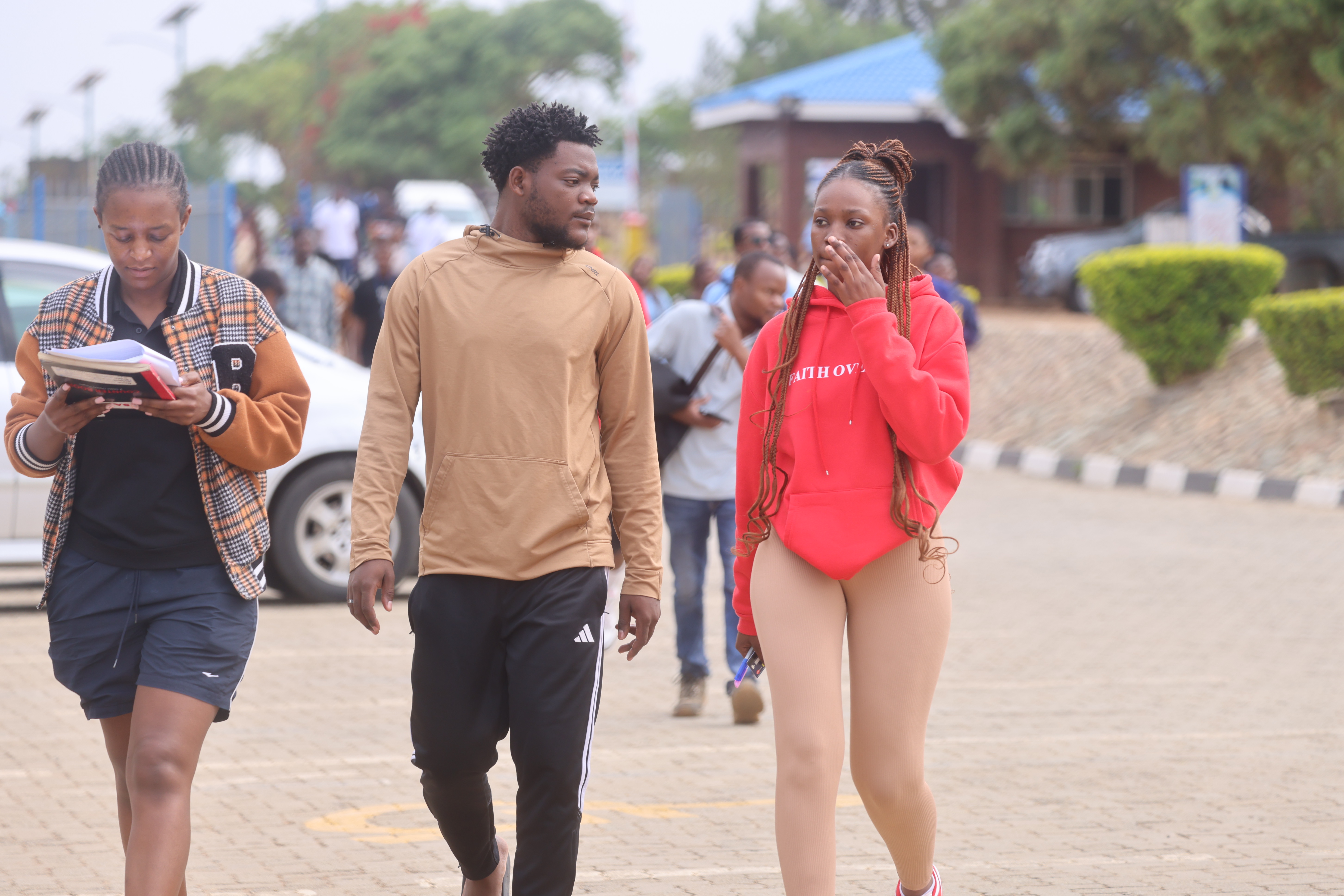
The conversation about university love is one most students entertain but rarely discuss openly. Are campus relationships foundations for lifelong commitment, or simply companionship shaped by circumstance? The truth, like many things in life, is not straightforward.
For Caroline Tivatyi, MSU delivered both a career and a life partner. She enrolled in 2018 as a Psychology student and met Ray, an Information Systems student. Ray graduated in 2021, the same year they married. Caroline completed her studies in 2024. Today, eight years into their journey and raising two children, she reflects simply: “MSU brought us together before we even knew what the future held.”
University life is a period of transformation. Students arrive with one identity and leave with another, new ambitions, perspectives, and goals. To grow alongside someone through that change, and still choose each other afterwards, requires more than coincidence.
But for MSU alumnus Lesley (Class of 2025) “Relationship yaishanda pacampus chete kunge reg number,” he recalled, and the accuracy landed with an uncomfortable weight. “Tavhara zvatoperera ipapo.” The relationship only functioned on campus, much like a registration number. Once the semester ended, it was over.
Research from the MSU institutional repository supports these lived experiences. Back in 2015, researcher Moffat Machingura conducted a study examining how students at the university portrait an ideal marriage partner.The sample encompassed 340 students across eleven degree programmes, aged nineteen to twenty-six. The findings showed that physical attractiveness, social roles, geographical location, academic qualifications, affluence, and lifestyle were key considerations—suggesting that students already factor in post-graduation realities when choosing partners.
More recently, in 2024, researchers Mafa, Simango, Chigangaidze, and Mudehwe published work examining what they term "semester marriages" highlighting the emotional risks of relationships tied too tightly to the academic calendar, calling for stronger psycho-social support to help students navigate love with emotional intelligence.
Perhaps the greater question is whether society expects too much permanence from relationships formed during a time of personal change. Many university connections: friendships, routines, even academic interests - are seasonal. Yet romance is often judged differently, with success measured only by longevity rather than personal growth.
Caroline’s story represents love that lasted. Lesley’s story represents clarity and self-discovery. Both outcomes carry value. Sometimes relationships are lifelong; sometimes they serve a purpose for a particular season, helping individuals understand themselves better.
The problem is not campus relationships that end. The problem is campus relationships that end badly, with unprocessed trauma, with guilt that follows into subsequent relationships, with the kind of emotional debris that compromises focus on academic pursuits.
Campus love is real. It is complex, sometimes lasting, sometimes temporary. And occasionally, what may seem like “just passing time” becomes part of the growth that shapes who students become long after graduation.
Discussion
0Be the first to spark the conversation
No pulses recorded yet. Join the discussion below!
Leave a Pulse
Required fields are marked *